Coral Island
The farming sim that finally makes 3D visuals and four-player co-op feel like a natural fit for the genre, not a gimmick bolted on top.
Media
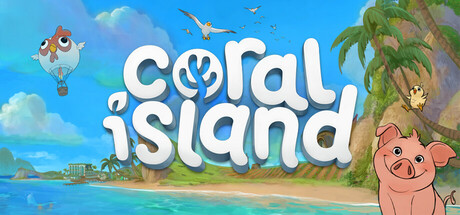
The farm-sim genre has spent the better part of a decade in Stardew Valley’s shadow, and most challengers have responded by leaning harder into pixel-art nostalgia rather than trying something structurally different. Coral Island took the opposite bet: a hand-painted 3D island, co-op support for up to four players, and a reef-restoration hook layered on top of the usual crops-and-relationships loop. Nearly three years past its 1.0 launch, that bet reads as one of the smarter ones the genre has made recently.
You inherit an overgrown plot on Coral Island, a town whose economy and coral reef have both seen better days, and the game hands you the same basic toolkit as its influences — till, plant, water, harvest, befriend — while building an unusually large amount of structure around it. Restoring the reef through diving, rebuilding community infrastructure through town projects, and getting to know more than seventy named islanders all sit alongside the farm itself as things the game actually wants you engaging with, not optional side content bolted on for padding.
The 3D switch actually pays off
Presentation is where Coral Island differentiates itself most clearly, and it’s a genuine success rather than a risky swing that didn’t land. The hand-painted 3D art style gives the island real depth and scale that pixel-art farm sims can’t easily match, without sacrificing the warmth and approachability the genre depends on — this doesn’t read as a more “serious” or sterile game for going 3D, it just looks and moves beautifully. Character customization is unusually generous for the genre too, letting you build an avatar that actually looks like a specific person rather than picking from a handful of preset sprites.
Co-op is the other structural differentiator, and it’s implemented with real intent rather than as a marketing bullet point. Up to four players can share a farm, split labor, and dive or explore together, and having a second or third person around changes the rhythm of a save meaningfully — chores that feel like a grind solo become something closer to a shared ritual with friends.
Depth that goes past the farm
The reef-diving system is Coral Island’s best idea: restoring the coral reef isn’t a cosmetic side activity, it’s tied into the town’s broader recovery arc and gives underwater exploration a purpose beyond loot collection. The social side backs this up with real scale — seventy-plus named islanders and twenty-five romanceable characters is a large cast even by genre standards, and the writing generally earns the investment rather than coasting on quantity alone.
Not every secondary system holds up as well. Mining and museum donation content feels comparatively thin next to the farming and relationship systems, functional rather than especially memorable, and the opening hours introduce a lot of overlapping systems fairly quickly — new players coming from a more minimal life sim may need a session or two just to get their footing.
Where the seams show
Once a farm scales up, Coral Island runs into the same wall most life sims eventually do: watering, feeding, and restocking routines that were satisfying early can flatten into chores by the midgame, and the game doesn’t do much to disrupt that rhythm on its own. Console and Steam Deck performance has also historically lagged the PC version at points since launch, though the gap has narrowed with post-launch patching.
Verdict
Coral Island set out to prove that a farm sim didn’t need to look or play like Stardew Valley to work, and very nearly three years on, that case holds up. The 3D presentation is genuinely lovely rather than a novelty, co-op farming is implemented with real care, and the reef-restoration hook gives the loop a hook of its own. Some late-game repetition and a few underbaked secondary systems keep it from perfection, but at $29.99 this is an easy recommendation for genre fans looking for something visually and structurally different from the usual pixel-art crowd.
More to read

Tales of Seikyu
A gorgeous, gentle farming life-sim with a clever shapeshifting hook — already lovely, and only getting bigger.
Farlands
A gentle, quietly melancholy farming sim that swaps a valley for a whole solar system — two years of Early Access well spent, even if the 1.0 landing has been bumpier than the journey.
Sun Haven
An enormously generous fantasy farming RPG stuffed with more content than almost any rival — weighed down by bloat, long-standing bugs, and a storefront full of cosmetic DLC.
Comments
0